
Pain versus suffering

Pain versus Suffering – as it’s presented to me
In the Understanding Pain Book Club a couple of months ago, someone asked a question about the difference between "hurt" and "pain." As a group, we established that the words are often used interchangeably with no distinct difference that we could pinpoint. However, the question the participant was getting at was about the difference between pain and suffering. Before you roll your eyes, let me say this. I am not a Buddhist, I will not claim to be wise beyond my years OR my experiences, nor will I rattle off to you how to live a holier life (something that repelled me from the yoga discipline).
But. I will tell you what I see, day in and day out (which is also reflected in my personal experiences).
People's actual physical pain is often (not always!!!) not that intense. It's the stories; the mental projections of an impaired future self; the anxieties of future experiences that may or may not happen; sometimes the loss of one's identity because the current state feels "other than" one's "true" self.
Our Brains Create Meaning
As humans, our brains are designed to add context to information to help us understand it. Context creates meaning that helps us make sense of of the world around us and our place in it. This meaning creates feelings that often drive our behaviors (psychological and physical behaviors). This is how marketing works and why SuperBowl ads make us cry (or just me?) and successfully change what we believe and buy.
With persistent pain, the meaning we attach to the physical pain is often (not always!!!) far worse than the pain itself.

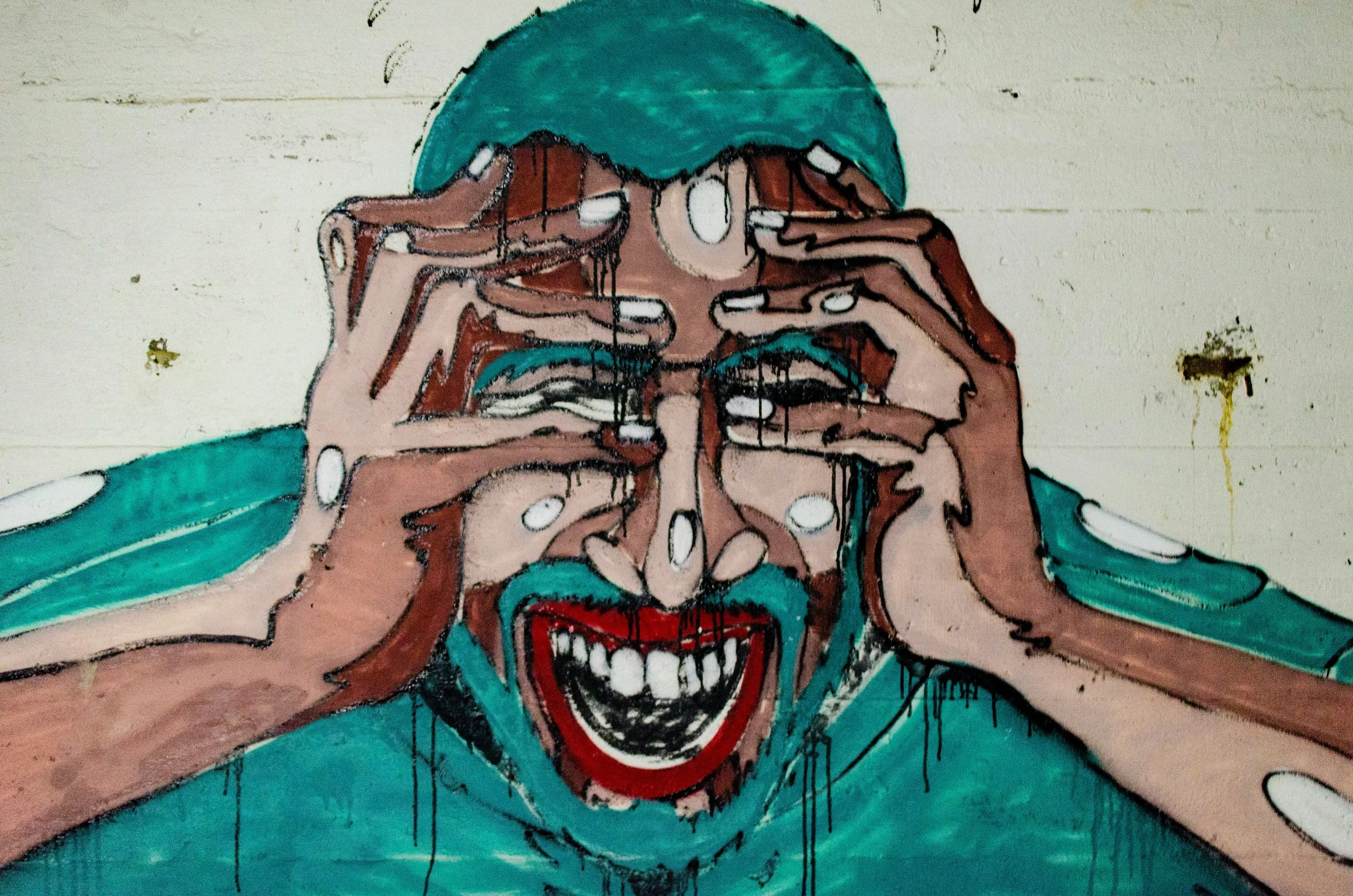
The anxiety and fear of pain are inseparable from what we think our pain means. This lends itself to rumination and/or catastrophization which research shows is fodder for the pain cycle. Emotions are electro-chemical. The molecules and neurons involved in what we feel emotionally have a direct impact on how quickly and effeciently the pain signal is emitted by way of amplifying the communication pathways between neurons.
The stories we tell ourselves are enmeshed in our fabric in so many ways because they help us understand who we are. But as the therapeutic saying goes, the stories were created for a purpose that served us once upon a time. At some point, the stories no longer serve us and actually harm our ability to adapt positively. The work lies in our willingness to untangle them and change them – a feat that requires a lot of effort, time, self awareness, curiosity, and support.
It Starts With Awareness
Personally, even though I don't have persistent pain, all of the above still applies. I work tirelessly at abating my future/anxious oriented brain that brings its challenges to other areas of my life. I'm sharing this to emphasize that what I ask others to work on, I work on too. And as I write this, it's from a place of humble knowing that a 500 word post will not be all that's needed to fix your problems (which feels especially poignant to emphasize around the New Year). However, if you can separate the two pieces and observe them side by side – the pain itself and the stories about the pain – that is the start of it all. And a start feels good enough for January.
Till next time, keep moving.
alia